Boat dealer websites that sell beyond the marketplace
Boat Trader gets the eyeballs — and charges you for your own buyers while ranking above you in Google. A storefront in your name that loads instantly, specs every hull properly, and captures the lead directly is how dealers stop renting their own demand.
Built for how boats sell
Real unit pages, not photo dumps
A boat listing lives on its specs: hours, engine, length, beam, trailer. DealerForge builds detail pages that carry all of it — structured so Google ranks the boat under YOUR name, not a marketplace's.
Spec-complete unit pages
Engine hours, horsepower, length, beam, fuel, trailer status — every unit page carries the full spec sheet buyers cross-shop on, with its own rankable URL.
Rank in your own name
When someone searches a model you stock, the marketplaces outrank most dealer sites. Structured data and 100/100 scores put your listing in the fight — and the lead comes to you, commission-free.
Financing-first buying
Boats are payment purchases. Payment-based search, finance CTAs, and credit application flow are built into the storefront, not bolted on.
Built for seasonality
Spring rush, fall clearance, winterization — seasonal pages and promos are easy to run, and the AI follow-up works your February leads so they buy in April.
Sub-second everywhere
Buyers browse from the dock, the lake house wifi, a truck at the ramp. Edge-rendered pages load in under a second on all of it.
Service, storage & brokerage
Service scheduling, winter storage, and brokerage/consignment pages with their own lead capture — the whole operation on one site.
Why dealers switch
Marketplace dependence vs. your own storefront
Both have a place. Only one builds equity in your name.
The switch, by the numbers
Why dealers move
Same platform, quoted for your store — tuned to how your inventory actually sells.
Every lead from your own storefront is free after your monthly rate. No per-lead fees, no marketplace middleman on your own demand.
Custom design, hosting, SEO, inventory sync, financing tools — all included. Compare that to your marketplace invoice.
Including migration from your current site with every URL redirected — rankings and bookmarks survive the switch.
Search built for your inventory
How boat shoppers actually search
A pontoon buyer and a bass-boat buyer share almost nothing. They filter by what the boat is for, then hull length, then what is hanging off the transom.
- Type
- PontoonTritoonBowriderDeck boatCenter consoleBass boatCruiserPWC
- Length
- Under 18'18–20'20–24'24–28'28'+
- Engine
- OutboardInboardStern driveJet
- Horsepower
- Under 9090–150150–250250+
- Capacity
- 6 people81012+
- Included
- TrailerWake towerDepth finderBimini top
Engine hours, fuel type and trailer status sit on the listing itself, so a buyer never has to call to find out whether the trailer is part of the price.
See it in action
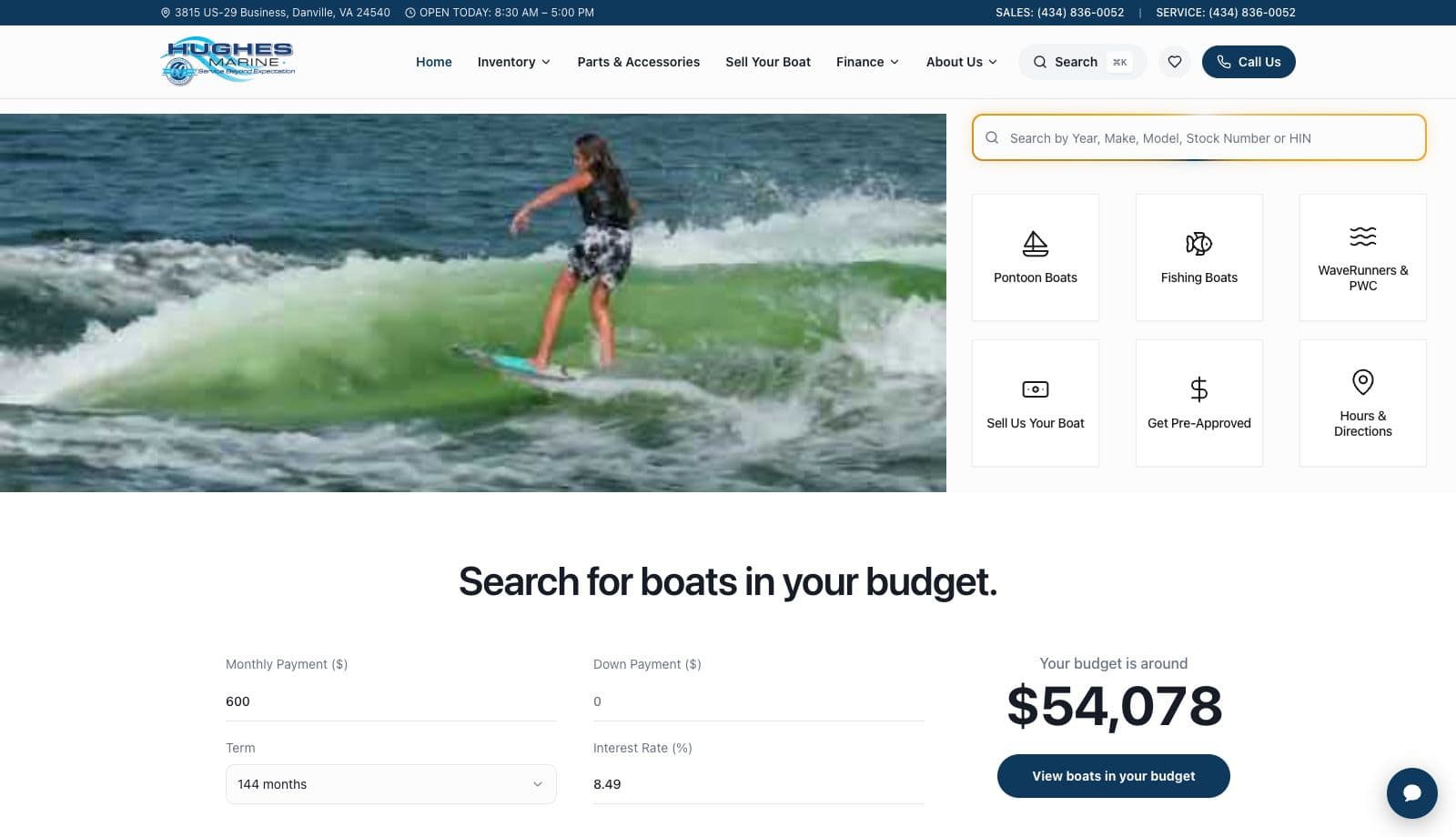
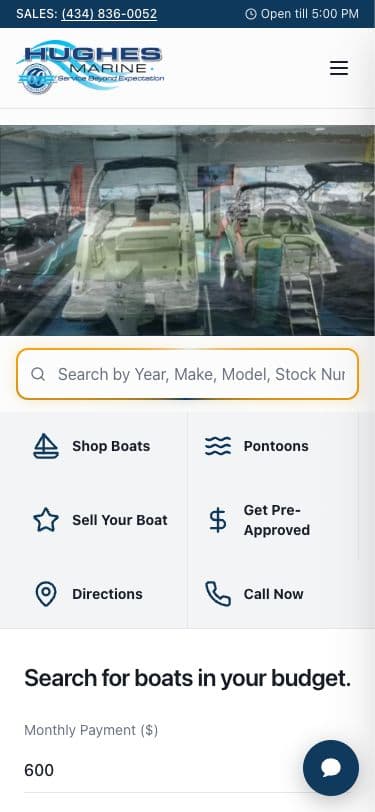
A marine store on DealerForge
Hughes Marine of Danville, VA — 70 boats on the DealerForge marine build: budget-based boat search, category tiles from pontoons to PWC, sell-your-boat and financing flows, and lead capture on every screen.
FAQ
Boat dealer questions, answered
Can you sync our marine inventory?
Yes. CSV, SFTP, or a hosted export from whatever system runs your floor — units, specs, hours, and photos sync automatically, and sold boats drop off on their own. If you manage inventory in a spreadsheet, that works too.
Should we drop Boat Trader if we get our own site?
Not necessarily — marketplaces are a fine top-of-funnel channel. The point is to stop being ONLY there: your own storefront captures the direct demand, ranks in your name, and turns marketplace browsers who Google your dealership into direct leads.
Does it handle brokerage and consignment listings?
Yes — brokerage units can live alongside your own inventory with their own labeling and lead routing, so the right salesperson gets the right conversation.
What does it cost?
Quoted for your store — no setup fees, no long-term contract. Many marine dealers spend more on a single month of marketplace fees.
Do you publish engine hours and service history?
Yes, as proper fields rather than free text, so buyers can filter on hours and see what has been done. On brokerage boats you can show as much or as little history as the owner has given you, with the gaps marked honestly.
What happens to listings over the winter?
Boats in storage or shrink-wrapped stay live with last season's photos and a clear note, so off-season search demand still lands on your pages. Spring commissioning dates can publish on the listing so buyers know when they can see it.
Can a buyer get a payment on a boat the way they would on a car?
Yes — marine terms run much longer than automotive, so payment search and the calculator on each listing use the term you actually sell at, and the finance application routes to whichever lender you use for that price band.
Get started
Get your marine dealership online
Tell us about your store and we'll get your build started — live in 7 to 21 days.